
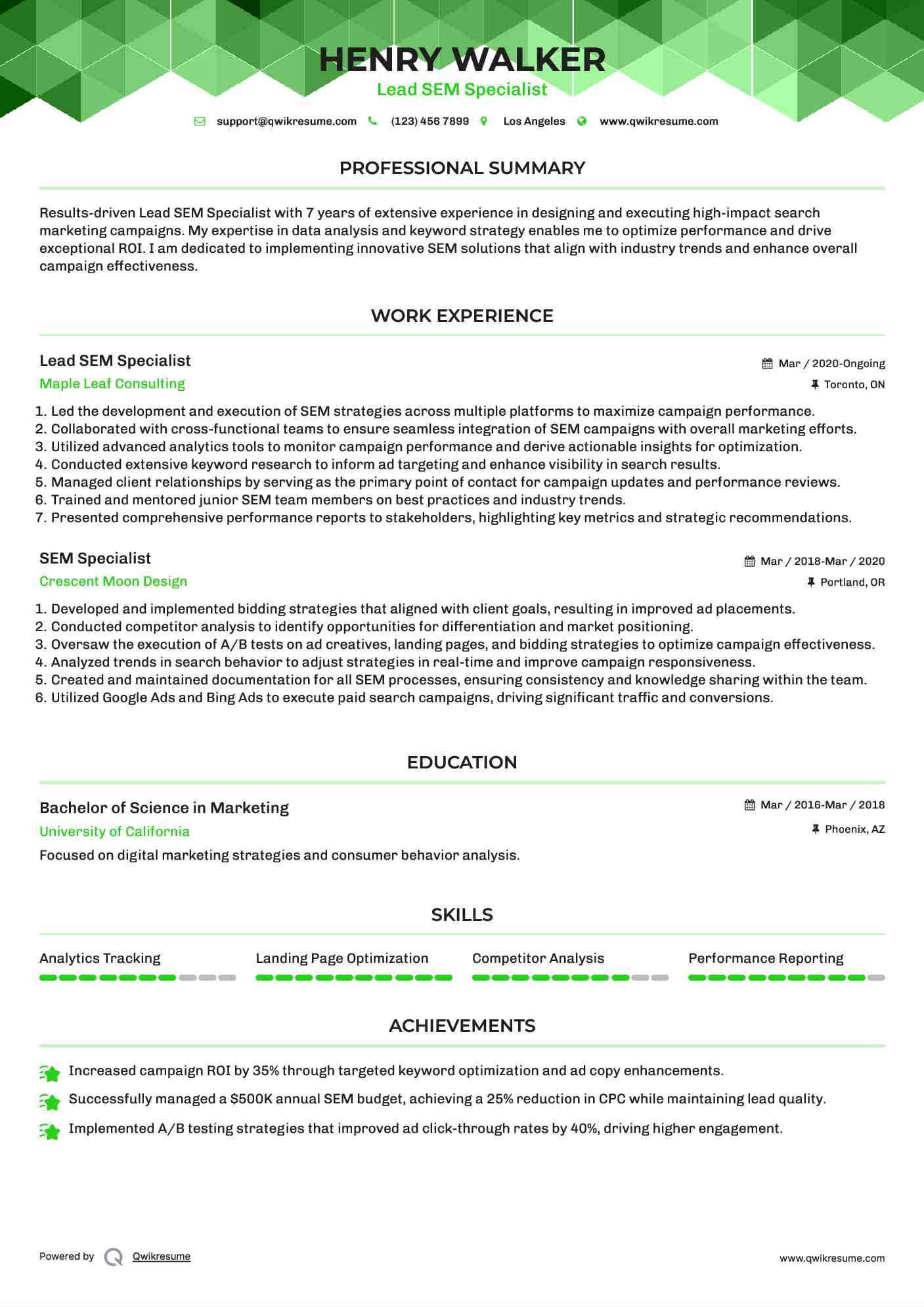
What Does an SEM Specialist Do? Skills, Responsibilities, and Career Path
What Is an SEM Specialist?
An SEM specialist helps businesses reach potential customers through paid advertising on search engines. SEM stands for search engine marketing. In everyday use, the term often refers specifically to paid search campaigns, such as ads shown on Google or Bing when someone searches for a product, service, or answer.
By combining audience research, campaign strategy, ad copy, and performance analysis, an SEM specialist works to make advertising more relevant and cost-effective. The goal is not simply to get more clicks—it is to attract qualified visitors and encourage valuable actions, such as purchases, sign-ups, or inquiries.
What Does an SEM Specialist Do?
An SEM specialist manages the planning, launch, and ongoing improvement of paid search campaigns. Responsibilities vary by employer and account size, but commonly include:
- Researching keywords: Identifying the search terms that prospective customers use and assessing their relevance, competition, and cost.
- Building campaigns: Organizing campaigns and ad groups around products, services, audiences, or business goals.
- Writing ad copy: Creating clear, compelling advertisements that match search intent and follow platform policies.
- Managing budgets and bids: Setting spending limits and adjusting bidding strategies to support campaign goals.
- Improving landing pages: Recommending ways to make the page visitors reach after clicking an ad more relevant, useful, and easy to navigate.
- Tracking performance: Monitoring metrics such as impressions, clicks, conversions, cost per click, and return on ad spend.
- Testing and optimizing: Comparing different ads, keywords, bids, and targeting options to find opportunities for improvement.
- Reporting results: Explaining performance and recommendations to clients, managers, or other stakeholders.
SEM Specialist vs. SEO Specialist
SEM and SEO are related, but they are not the same. An SEM specialist typically focuses on paid search advertising. An SEO specialist focuses on improving a website’s visibility in unpaid, or organic, search results.
Paid search can generate visibility while a campaign is active, but it requires an advertising budget. SEO generally takes time and involves improving a site’s content, technical setup, and authority. Many digital marketing teams coordinate both approaches to reach people at different stages of the buying journey.
Important Skills for an SEM Specialist
Successful SEM work calls for a mix of analytical, creative, and communication skills. Useful abilities include:
- Data analysis: Reading campaign reports, spotting patterns, and turning performance data into practical decisions.
- Attention to detail: Checking settings, links, budgets, tracking, and ad requirements before and after launch.
- Writing and messaging: Communicating a product’s value clearly within the limits of search ad formats.
- Strategic thinking: Connecting campaign choices to business goals, customer needs, and the competitive landscape.
- Problem-solving: Investigating issues such as declining conversions, rising costs, or low ad relevance.
- Adaptability: Keeping up with changes to advertising platforms, privacy practices, and consumer behavior.
Tools an SEM Specialist May Use
SEM specialists often work with advertising platforms such as Google Ads and Microsoft Advertising. They may also use analytics and measurement tools, keyword research platforms, spreadsheets, and reporting dashboards. The specific tools depend on the company, campaign goals, and available data.
Tools can help organize information and automate routine tasks, but they do not replace sound judgment. Specialists still need to understand the audience, assess the quality of the data, and decide which changes are likely to support the campaign’s objectives.
How SEM Campaigns Are Measured
The right performance measures depend on what a campaign is designed to achieve. A campaign focused on online sales may be evaluated by purchases, revenue, and return on ad spend. A lead-generation campaign may be measured by form submissions, calls, qualified leads, or cost per lead.
Common metrics include:
- Impressions: How often an ad is shown.
- Clicks: How often people select an ad.
- Click-through rate (CTR): The percentage of impressions that result in clicks.
- Cost per click (CPC): The average amount paid for a click.
- Conversions: Valuable actions completed after an ad interaction.
- Conversion rate: The percentage of interactions that lead to a conversion.
- Return on ad spend (ROAS): Revenue attributed to advertising compared with advertising cost.
No single metric tells the whole story. For example, a campaign may receive many clicks but few qualified leads. An SEM specialist considers the full customer journey and uses reliable conversion tracking to evaluate results.
How to Become an SEM Specialist
There is no single path into SEM. Many specialists build their skills through digital marketing courses, platform training, hands-on practice, or related work in marketing, analytics, or content. Studying how search auctions, keyword targeting, ad policies, and conversion tracking work can provide a strong foundation.
Practical experience is especially valuable. New professionals can practice by creating sample campaign plans, learning to interpret advertising reports, and documenting the reasoning behind their recommendations. Platform certifications may help demonstrate familiarity with advertising tools, though they are most useful when paired with real-world skills and clear examples of problem-solving.
Why Businesses Work With SEM Specialists
Search advertising can be competitive, and campaign settings can have a direct effect on spending and results. An SEM specialist helps businesses make informed decisions about targeting, budgets, measurement, and optimization. With clear goals and accurate tracking, paid search can be a useful way to connect with people who are actively looking for relevant products or services.
Ultimately, an effective SEM specialist balances performance with customer relevance. The best campaigns do more than appear in search results: they provide a helpful next step for the person who searched.
SEM Specialist FAQs: Roles, Meaning, and SEO Differences
- What is the difference between SEO and SEM specialist?
- What does SEM mean?
- What is a SEM role?
- What is the difference between SEO and SEM?
- What is a SEM Specialist?
What is the difference between SEO and SEM specialist?
An SEO specialist focuses on improving a website’s visibility in unpaid search results by working on areas such as content, site structure, and technical performance. An SEM specialist typically manages paid search advertising, including keyword targeting, ad creation, budgets, and campaign optimization. In short, SEO aims to earn organic traffic over time, while SEM uses paid ads to reach searchers. Since the terms can sometimes be used differently across companies, it’s helpful to check each role’s specific responsibilities.
What does SEM mean?
SEM stands for search engine marketing. It refers to using search engines to promote a business, product, or service. The term is often used to describe paid search advertising, where businesses pay to show ads in search results for relevant queries. SEM specialists manage these campaigns by selecting keywords, creating ads, setting budgets, and measuring performance.
What is a SEM role?
An SEM role focuses on planning, managing, and improving paid advertising campaigns on search engines such as Google and Bing. A search engine marketing specialist may research keywords, write ad copy, set budgets and bids, monitor campaign performance, and use analytics to improve results. The role’s main goal is to connect businesses with people searching for relevant products or services while using the advertising budget effectively.
What is the difference between SEO and SEM?
SEO (search engine optimization) focuses on improving a website’s visibility in unpaid, or organic, search results through relevant content, technical improvements, and other best practices. SEM (search engine marketing) is often used to describe paid search advertising, such as ads shown on search engines. SEO can build visibility over time, while paid SEM campaigns can bring targeted traffic as long as they’re running and funded. Businesses may use both strategies to reach potential customers through search.
What is a SEM Specialist?
A search engine marketing (SEM) specialist plans and manages paid advertising campaigns on search engines such as Google and Bing. They research keywords, write ads, set budgets and bids, monitor performance, and optimize campaigns to help businesses reach relevant audiences and achieve goals such as sales, leads, or website visits.