
SEO, SEM, and SMO: How They Work Together to Grow Your Online Presence
Businesses have more ways than ever to reach customers online, but choosing the right digital marketing strategies can feel complicated. Three commonly used approaches are search engine optimization (SEO), search engine marketing (SEM), and social media optimization (SMO). Each helps people discover a brand, but they work in different ways.
Understanding how SEO, SEM, and SMO differ—and how they complement one another—can help you build a more effective digital marketing plan.
What Is SEO?
Search engine optimization is the process of improving a website so it can earn more visibility in unpaid search results. SEO focuses on making pages useful to visitors and easier for search engines to discover, understand, and index.
Common SEO activities include:
- Keyword research: Identifying the words and questions people use when searching for relevant products, services, or information.
- Helpful content: Creating accurate, original pages that meet the needs behind a search.
- On-page optimization: Organizing page titles, headings, links, and content so they are clear to both readers and search engines.
- Technical SEO: Improving site speed, mobile usability, crawlability, and other technical features.
- Authority building: Earning relevant links and mentions that help establish a website’s credibility.
SEO is generally a long-term effort. Results can take time, but strong organic visibility can continue to attract visitors without paying for every click.
What Is SEM?
Search engine marketing is a broad term for promoting a website through search engines. In many marketing contexts, SEM refers specifically to paid search advertising, such as sponsored listings that appear on search results pages.
With paid search, advertisers typically choose relevant keywords, write ads, set budgets, and direct visitors to landing pages. Depending on the platform and campaign, advertisers may pay when someone clicks an ad or when another campaign action occurs.
SEM can help businesses:
- Reach potential customers while they are actively searching.
- Promote a new offer or time-sensitive campaign.
- Test keywords, ad messages, and landing pages.
- Generate traffic while organic visibility is still growing.
Paid search can deliver visibility quickly, but it requires ongoing budget management. Traffic may decline when a campaign stops, so it is important to measure results and make sure advertising costs are justified by business outcomes.
What Is SMO?
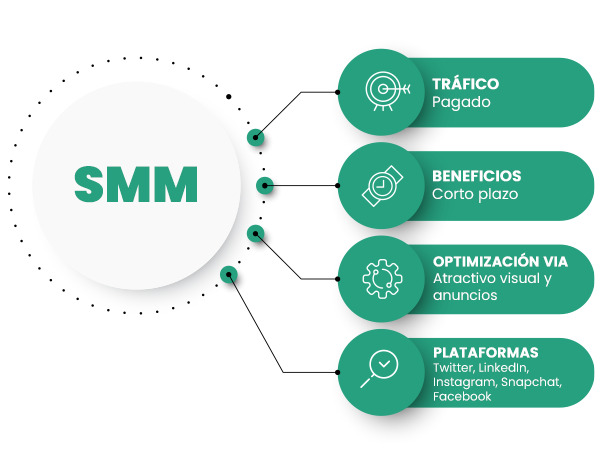
Social media optimization is the practice of improving how a brand’s content and profiles perform on social media platforms. SMO can include both organic activities and, in some definitions, social advertising. Its main focus is making content easier to find, share, and engage with across social channels.
SMO may involve:
- Creating complete, consistent social media profiles.
- Publishing useful content suited to each platform and audience.
- Using clear captions, visuals, and calls to action.
- Encouraging meaningful conversations and responding to customers.
- Reviewing engagement and referral traffic to learn what resonates.
Social media activity can help increase brand awareness and bring visitors to a website. It may also help a business understand its audience and identify topics for future content. However, social engagement does not automatically lead to sales; content should support clear business goals.
SEO vs. SEM vs. SMO
The simplest distinction is how each channel attracts attention:
- SEO: Earns visibility in unpaid search results.
- SEM: Uses paid search campaigns to reach people through search engines.
- SMO: Improves a brand’s presence and content performance on social media.
These approaches also differ in timing and cost. Paid search can provide exposure soon after a campaign launches, while SEO usually takes longer to build. SMO can help brands stay connected with their communities, but results depend on the platform, content, and audience. None is a guaranteed shortcut to growth; each requires planning, consistent execution, and measurement.
How SEO, SEM, and SMO Work Together
SEO, SEM, and SMO are most effective when they support a shared strategy. For example, a business launching a new service might use paid search to reach people searching for that service, publish an in-depth website guide to support SEO, and share helpful excerpts or videos on social media.
Insights can also be shared across channels. Search campaign data may reveal which terms attract qualified visitors. Those insights can inform website content and social posts. Questions and comments on social media may reveal topics that deserve a detailed article. Organic search performance can show which pages may benefit from paid promotion.
Choosing the Right Approach
The right mix depends on your audience, goals, resources, and timeline. Before investing, consider these questions:
- Are you trying to build long-term visibility, promote an immediate offer, or grow brand awareness?
- Which search engines and social platforms does your audience use?
- Do you have useful landing pages and content ready for visitors?
- Can you track leads, sales, sign-ups, or other meaningful actions?
- What budget and staff time can you consistently commit?
Smaller organizations may begin with a well-structured website, useful content, and a consistent presence on one or two relevant social platforms. Paid search can be added when there is a clear goal, a defined budget, and a way to evaluate performance.
Measuring Performance
Choose metrics that match your objectives rather than focusing only on traffic or likes. SEO can be evaluated through organic impressions, rankings, clicks, and conversions. SEM can be measured through ad spend, clicks, conversion rate, and cost per conversion. SMO may be assessed through reach, engagement, referral visits, and actions such as inquiries or registrations.
Use analytics tools and consistent tracking to understand what is working. Review performance regularly, test changes carefully, and give long-term efforts enough time to produce meaningful data.
Conclusion
SEO, SEM, and SMO each offer a different way to connect with people online. SEO builds organic search visibility, SEM uses paid search to reach potential customers, and SMO helps improve a brand’s presence on social media. When coordinated around clear goals and measured with relevant data, these strategies can work together to strengthen visibility, attract qualified visitors, and support sustainable business growth.