
Local SEO with Semrush: A Practical Guide for Local Businesses
Local SEO with Semrush: A Practical Guide for Local Businesses
Local search engine optimization (local SEO) helps businesses appear when people search online for nearby services, products, or locations. A strong local SEO strategy can make it easier for potential customers to find your business in Google Search and on Google Maps. Semrush offers tools that can help businesses research local keywords, monitor rankings, manage business listings, and evaluate their online visibility.
This guide explains how to use Semrush as part of a practical local SEO workflow. Features and availability may vary by Semrush product, plan, and location.
What Is Local SEO?
Local SEO is the process of improving a business’s visibility in search results connected to a geographic area. For example, a person might search for “plumber near me,” “Seattle coffee shop,” or “dentist in Austin.” Search engines use factors such as relevance, distance, and prominence to determine which businesses to show.
Local SEO involves more than adding a city name to a website. It may include optimizing your website and Google Business Profile, maintaining accurate business information across directories, earning legitimate reviews, and building local authority.
How Semrush Can Help with Local SEO
Semrush provides a collection of SEO and marketing tools. Depending on your needs and subscription, its local SEO offerings can help with tasks such as:
- Researching search terms people use in a local area
- Tracking rankings for location-specific keywords
- Monitoring visibility in map results
- Reviewing business listing consistency across directories
- Managing or monitoring customer reviews
- Analyzing competitors and finding content opportunities
Semrush is a toolkit, not a replacement for accurate business information, useful content, good customer service, or a well-maintained website. The best results come from combining software insights with consistent work.
Research Local Keywords
Start by identifying the phrases potential customers use when looking for your products or services. A local keyword often combines a service or product with a city, neighborhood, or geographic term. Examples include “emergency electrician in Denver” and “family photographer Brooklyn.”
Use Semrush’s keyword research tools to explore relevant search terms, related phrases, search intent, and estimated search demand. Treat search-volume figures as estimates rather than exact counts. Also consider how real customers describe their needs: keyword data is useful, but it should not dictate every page or heading.
Group keywords by service and location. If your business serves several cities, create a plan for the areas you genuinely serve instead of producing thin pages that simply swap one city name for another.
Optimize Your Website for Local Searches
Your website should make it clear what your business offers, where it operates, and how customers can contact you. Use local keywords naturally in relevant page titles, headings, service descriptions, and copy. Avoid repeating the same phrase excessively, which can make pages difficult to read and may look manipulative.
Consider creating dedicated pages for your main services and, where useful, the locations you serve. Each page should provide original, useful information. Include details such as service availability, local expertise, appointment options, and answers to common customer questions. Make sure your business name, address, and phone number are accurate wherever they appear.
Semrush’s site auditing and on-page SEO tools can help identify technical issues and optimization opportunities. Review recommendations thoughtfully: not every automated suggestion will fit your business or audience.
Improve Your Google Business Profile
For many local businesses, Google Business Profile is an important part of local visibility. Claim and verify your profile, then keep its details current. Choose accurate business categories, add services, update hours, upload representative photos, and respond to customer questions and reviews.
Semrush’s local tools may help you monitor or manage certain profile and listing information, depending on the product and plan. However, business owners should still check their Google Business Profile directly to confirm that public-facing details are correct.
Do not use a virtual office or an address where your business is not eligible to show customers. Follow Google’s current eligibility and representation guidelines, since violations can put a profile at risk.
Check Business Listings for Accuracy
Business directories and local platforms can display essential details such as your business name, address, phone number, website, and hours. Inaccurate or inconsistent information can confuse customers and make it harder to trust what they find online.
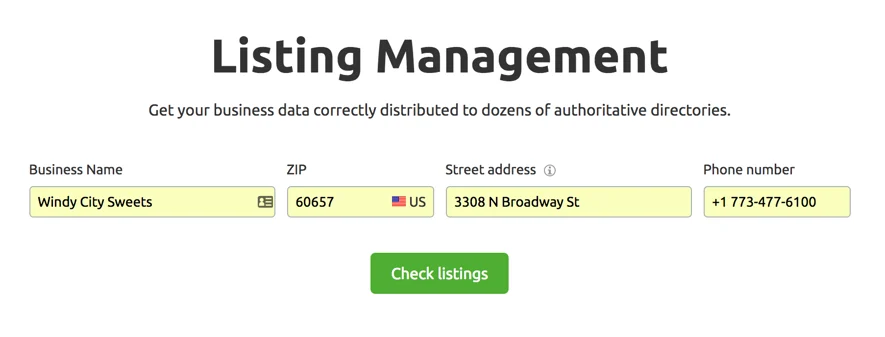
Semrush Local may provide listing-management features that help businesses review and distribute information to supported directories. Before making changes, establish the correct version of your business details and check that any updates reflect how the business actually operates. Pay particular attention to old addresses, duplicate listings, and phone numbers that are no longer in use.
Track Local Rankings and Map Visibility
Local rankings can vary by search term, device, and the searcher’s location. A business may appear prominently in one neighborhood but less often a few miles away. Checking results only from your own computer may not provide a complete picture.
Semrush’s local rank-tracking features can help monitor selected keywords and locations over time. Track terms that reflect your actual services and service areas, and review trends rather than reacting to a single ranking change. Rankings are useful indicators, but they are not the only measure of success. Also monitor calls, website visits, direction requests, bookings, and qualified leads where those metrics are available.
Monitor and Respond to Reviews
Reviews influence how customers evaluate a business and can contribute to its local prominence. Encourage satisfied customers to share honest feedback, but do not buy reviews, write them yourself, or offer incentives in ways that violate platform policies.
Respond professionally to both positive and negative reviews. Thank customers for positive feedback, and address concerns calmly without sharing private information. Semrush review-management features may help monitor reviews from supported sources, but responses should remain personal and accurate.
Learn from Local Competitors
Competitor research can reveal opportunities, such as services you have not described clearly, useful topics to cover, or local directories you have overlooked. Semrush can help analyze competitors’ organic visibility, keywords, and content.
Use these findings for inspiration, not imitation. A competitor’s rankings do not prove that a tactic is appropriate or effective for your business. Focus on creating accurate, distinctive information that helps customers make a decision.
A Simple Local SEO Workflow
- Set a baseline: Record your main services, service areas, current website performance, and key customer actions.
- Research keywords: Find relevant service-and-location searches and group them by page or topic.
- Fix essential information: Confirm that your website, Google Business Profile, and supported directory listings use accurate details.
- Improve important pages: Make service and location pages genuinely useful, clear, and easy to navigate.
- Build trust: Request honest reviews, respond thoughtfully, and demonstrate your expertise.
- Measure progress: Review rankings alongside calls, visits, leads, and other meaningful business outcomes.
Common Local SEO Mistakes to Avoid
- Creating near-identical location pages with little value for visitors
- Using inaccurate addresses or service areas
- Stuffing city names and keywords into website copy
- Ignoring duplicate or outdated business listings
- Buying reviews or posting fake customer feedback
- Assuming a ranking report guarantees traffic or sales
- Making website changes based on tool recommendations without checking whether they make sense
Is Semrush Useful for Local SEO?
Semrush can be useful for organizing and measuring local SEO work, particularly when a business needs keyword research, local rank tracking, listing support, or review monitoring. Its value depends on the features available in your plan and whether those features match your goals.
Before choosing a plan, compare the tools you need with their current pricing, location coverage, and feature limits. A small business may only need a few core capabilities, while an agency or multi-location company may require more advanced reporting and management options.
Conclusion
Local SEO with Semrush is most effective when the tools support a clear, customer-focused strategy. Research relevant local searches, keep business information accurate, improve useful website pages, manage reviews responsibly, and track outcomes over time. Semrush can help you find opportunities and monitor progress, but lasting local visibility depends on providing reliable information and a strong experience for customers.
Top 4 FAQs About Local SEO with Semrush: DIY, Costs, Relevance, and AI Impact
- Can I do local SEO myself?
- How much should I pay for local SEO?
- Is local SEO a thing?
- Is SEO dead now with AI?
Can I do local SEO myself?
Yes, you can do local SEO yourself, especially if you have a single location and time to manage the basics. Start by optimizing your Google Business Profile, keeping your business name, address, and phone number accurate across directories, requesting honest customer reviews, and creating helpful website pages for your services and service area. Tools such as Semrush can help you research local keywords, check rankings, and spot listing or website issues. Local SEO takes ongoing effort, so track calls, visits, and leads—not just rankings—and consider professional help if your business has multiple locations or needs a more advanced strategy.
How much should I pay for local SEO?
The cost of local SEO varies based on your market, competition, number of locations, and the work required. In the U.S., small businesses might pay roughly $300–$2,000 per month for ongoing local SEO, while competitive markets or multi-location campaigns can cost more; one-time audits and projects are priced separately. Ask providers for a clear scope covering services such as Google Business Profile optimization, local listings, website improvements, and reporting, and be cautious of guaranteed rankings. Semrush can help with research and tracking, but its subscription is separate from the cost of professional SEO services.
Is local SEO a thing?
Yes, local SEO is a real and important part of search engine optimization. It helps businesses appear in search results when people look for nearby products or services, such as “coffee shop near me” or “dentist in Chicago.” Local SEO includes optimizing your website and Google Business Profile, keeping business details accurate across directories, earning genuine customer reviews, and building visibility in the communities you serve. Tools like Semrush can help research local keywords and track visibility, but useful content and accurate business information remain essential.
Is SEO dead now with AI?
No, SEO is not dead because of AI—it’s changing. AI-powered search features may affect how people discover information and which results they click, but search engines still need useful, accurate, trustworthy content to answer questions. For local businesses, the fundamentals remain important: keep your Google Business Profile and business listings accurate, create helpful pages for the services and areas you actually serve, earn genuine customer reviews, and make your website easy to use. Tools like Semrush can help research local keywords and monitor visibility, but they work best when paired with real expertise and a focus on customer needs.