
Digital Agency Marketing: A Practical Guide to Growing Your Business Online
Digital Agency Marketing: A Practical Guide to Growing Your Business Online
Digital agency marketing brings together the strategies, tools, and expertise businesses use to reach customers online. A digital agency can help a company build brand awareness, attract qualified visitors, generate leads, and strengthen customer relationships through channels such as search engines, social media, email, and paid advertising.
Whether a business is just getting started or looking to improve its existing marketing, understanding how digital agency marketing works can make it easier to choose the right services and set realistic goals.
What Is Digital Agency Marketing?
Digital agency marketing is the planning and delivery of online marketing services by a specialized team. Depending on its focus, an agency may provide strategy, creative work, campaign management, analytics, or a combination of these services.
Common services include:
- Search engine optimization (SEO): Improving a website’s visibility in unpaid search results.
- Pay-per-click advertising (PPC): Managing paid campaigns on search engines and other digital platforms.
- Content marketing: Creating useful articles, videos, guides, and other resources for a target audience.
- Social media marketing: Developing a brand presence and engaging with audiences on social platforms.
- Email marketing: Sending relevant messages to subscribers and customers.
- Web design and development: Creating or improving websites to support usability, brand identity, and business goals.
- Analytics and reporting: Measuring performance and using data to guide decisions.
Why Businesses Work With Digital Agencies
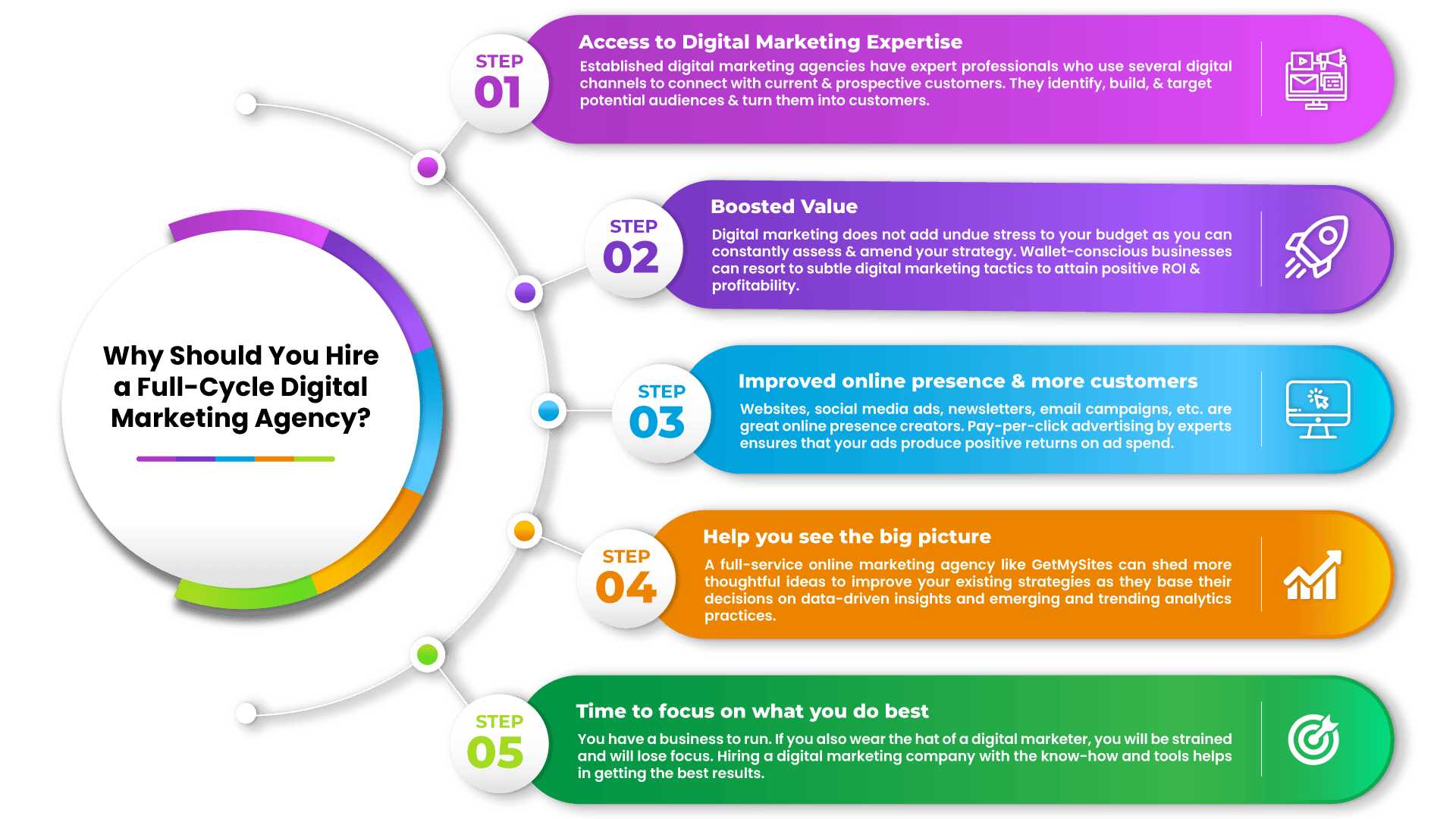
Digital marketing requires a mix of skills. A business may need expertise in writing, design, advertising platforms, website technology, and data analysis. Working with an agency can provide access to a team with experience across these areas without requiring the business to hire every specialist in-house.
An agency can also bring an outside perspective. By reviewing a company’s audience, website, competitors, and existing campaigns, the team may identify opportunities that are difficult to see from inside the organization.
However, hiring an agency does not guarantee results. Strong outcomes depend on a clear strategy, realistic expectations, consistent collaboration, and a good understanding of what success means for the business.
Building an Effective Digital Marketing Strategy
Set clear goals
Before selecting channels or launching campaigns, define what the business wants to achieve. Goals might include increasing qualified website traffic, generating leads, improving online sales, or encouraging repeat purchases. Specific goals make it easier to choose appropriate tactics and evaluate performance.
Understand the audience
Effective marketing begins with knowing who the business wants to reach. Consider the audience’s needs, questions, preferences, and decision-making process. Customer interviews, website analytics, search data, and sales-team feedback can all help build a more useful picture of the target audience.
Choose the right channels
Not every channel is right for every business. A company with a strong visual product may benefit from social media and video, while a business that solves a specific problem may find search marketing especially valuable. Channel choices should reflect the audience, the offer, available resources, and the time frame for results.
Create useful, consistent content
Content helps a business answer questions, explain its services, and build trust. Useful content should be accurate, relevant, easy to understand, and aligned with the needs of the audience. A consistent publishing schedule can help maintain momentum, but quality should come before quantity.
Measure and improve
Digital marketing offers many ways to track activity, but not every metric matters equally. Website visits, impressions, and social engagement can provide context. More meaningful measures may include qualified leads, conversion rates, cost per acquisition, revenue, and customer retention.
Regular reporting helps businesses understand what is working and where adjustments may be needed. Campaigns should be refined over time rather than treated as one-time efforts.
How to Choose a Digital Marketing Agency
Selecting an agency is an important business decision. Look for a team that takes time to understand the company’s goals, customers, industry, and resources. A thoughtful agency should be able to explain its recommendations in clear language and describe how performance will be measured.
Before signing an agreement, consider asking:
- What services are included, and what is outside the scope?
- Who will manage the account and communicate with the business?
- How often will the agency provide updates and reports?
- Which metrics will be used to evaluate progress?
- How are budgets, advertising costs, and additional fees handled?
- Does the business retain access to its website, analytics, and advertising accounts?
Case studies and references can offer useful context, but past results do not guarantee future performance. The right agency should be transparent about its methods, limitations, and expectations.
Common Challenges to Avoid
Businesses can get more value from digital agency marketing by avoiding a few common mistakes. One is expecting immediate results from strategies that take time to develop. SEO and content marketing, for example, often require ongoing effort before their impact becomes clear.
Another challenge is using too many channels without a clear plan. Spreading budgets and attention across multiple platforms can make it difficult to build momentum or determine what is effective. It is usually better to focus on the channels that best fit the audience and business goals.
Finally, marketing should not be separated from the rest of the customer experience. A campaign may attract attention, but the website, sales process, service, and follow-up also influence whether that interest turns into a lasting customer relationship.
The Value of a Strong Agency Partnership
The best digital agency relationships are collaborative. The agency contributes marketing expertise, while the business provides knowledge about its customers, services, operations, and priorities. Clear communication and shared expectations help both sides make better decisions.
With a focused strategy, appropriate channels, useful content, and regular measurement, digital agency marketing can support sustainable business growth. The key is to treat it as an ongoing process: learn about the audience, test thoughtful approaches, evaluate the results, and improve over time.
5 Digital Agency Marketing Tips to Attract and Convert More Clients
- Showcase measurable client results.
- Share useful insights on social media.
- Optimize your website for local search.
- Build case studies around client wins.
- Follow up with leads promptly.
Showcase measurable client results.
Showcase measurable client results to demonstrate the value of your digital agency’s work. Share clear, specific outcomes—such as increased qualified leads, improved conversion rates, or lower cost per acquisition—and explain the timeframe and strategy behind them. Use accurate data, get client permission, and provide enough context to make each result meaningful. Concrete evidence builds credibility, helps prospective clients understand what your agency can achieve, and sets realistic expectations.
Share useful insights on social media.
Sharing useful insights on social media helps a digital agency demonstrate its expertise and build trust with potential clients. Post practical tips, industry updates, brief case studies, or clear answers to common marketing questions—content that gives people a reason to follow and engage. Keep posts relevant to the audience, use a consistent voice, and focus on genuine value rather than constant promotion. Over time, helpful content can strengthen brand awareness and encourage meaningful conversations.
Optimize your website for local search.
Optimize your website for local search so nearby customers can easily find your business when they need your services. Include accurate location details, service areas, and locally relevant terms on key pages, and make sure your contact information is consistent across your website and online listings. Create helpful content that addresses local customer needs, ensure your site works well on mobile devices, and keep your business profile up to date. These steps can improve your visibility in local search results and make it easier for potential customers to get in touch.
Build case studies around client wins.
Build case studies around client wins to show prospective customers what your digital agency can accomplish. Highlight the client’s challenge, the strategy your team developed, and the measurable results—such as increased qualified leads, improved conversion rates, or stronger website traffic. Get the client’s permission, provide enough context to make the results meaningful, and avoid implying that every business will achieve the same outcome. Well-crafted case studies make your expertise tangible and give potential clients a clearer reason to trust your agency.
Follow up with leads promptly.
Follow up with leads promptly while your business is still fresh in their minds. A timely, helpful response can answer questions, build trust, and keep potential customers engaged as they consider their options. Set up a clear process for assigning and responding to inquiries, and personalize each follow-up rather than relying on generic messages. Even when a lead isn’t ready to make a decision, a thoughtful response can create a positive impression and leave the door open for future business.