
Google AdWords Management Services: A Guide to Smarter Campaigns
Google AdWords Management Services: What They Include and How to Choose
Google AdWords, now called Google Ads, can help businesses reach potential customers while they’re searching for products and services. But running effective campaigns takes more than choosing a few keywords and setting a budget. Campaign structure, ad messaging, audience settings, conversion tracking, and ongoing optimization all influence performance.
Google Ads management services help businesses plan, run, and improve their campaigns. Whether you manage a small local campaign or advertise across multiple markets, a qualified manager can help make your advertising more organized, measurable, and aligned with your business goals.
What Are Google Ads Management Services?
Google Ads management services involve the strategic setup and ongoing oversight of paid advertising campaigns on Google. Depending on the provider and your needs, services may include search ads, display ads, video campaigns, shopping campaigns, Performance Max, or remarketing.
Management may be provided by an agency, an independent specialist, or an in-house team. The scope can range from a one-time account review to full-service campaign planning, execution, reporting, and optimization.
What Does Google Ads Management Include?
Campaign Strategy and Planning
A strong campaign starts with clear objectives. A manager may work with you to identify what you want advertising to achieve, such as generating qualified leads, increasing online sales, encouraging phone calls, or building awareness. The strategy should reflect your audience, services, location, budget, and sales process.
Keyword Research and Organization
For search campaigns, keyword research helps identify the terms prospective customers use when looking for a solution. A manager can group relevant keywords into logically structured campaigns and ad groups, choose suitable match types, and add negative keywords to reduce exposure to irrelevant searches.
Keyword choices should reflect user intent, not just search volume. A phrase that suggests a person is ready to buy may be more valuable than a broad term that attracts general research traffic.
Ad Copy and Creative
Ad copy should clearly explain what you offer and why a potential customer should take the next step. Management services may include writing and testing headlines, descriptions, calls to action, and other ad assets. For visual campaigns, they may also involve coordinating images or video that fit the campaign and brand.
Effective advertising should be accurate and consistent with the landing page. Clear messaging helps visitors understand what to expect after clicking.
Campaign Setup and Configuration
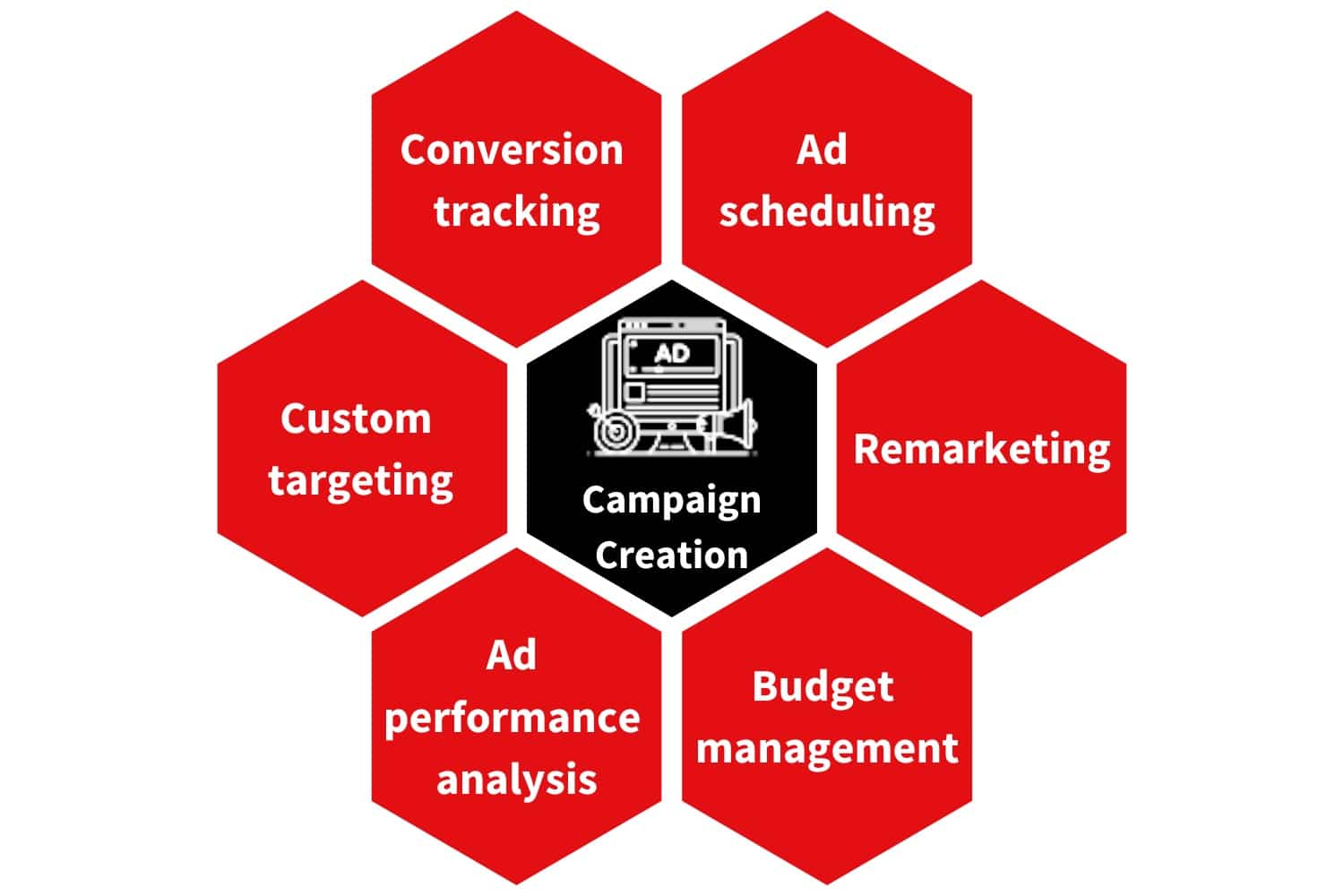
Campaign settings determine when, where, and to whom ads may be shown. A manager may configure locations, languages, schedules, devices, audiences, bidding strategies, and budget limits. The right settings depend on your business model and campaign goals.
For example, a service provider that works only in certain cities may need location targeting that reflects its actual service area. A national online store may require a different setup.
Conversion Tracking
Conversion tracking helps businesses understand what happens after someone clicks an ad. Depending on the business, useful conversions may include purchases, form submissions, calls, appointment requests, or other meaningful actions.
Accurate tracking is essential for evaluating results and informing optimization. Before launching campaigns, confirm that tracking is configured correctly and that the reported conversions reflect actions that matter to your business.
Landing Page Recommendations
Campaign performance depends on more than the ad itself. Visitors should arrive on a page that is relevant to their search and makes the next step clear. A management provider may review landing pages for message consistency, usability, mobile experience, page speed, and conversion opportunities.
Some providers offer landing page design or development, while others provide recommendations for your website team to implement.
Optimization and Testing
Google Ads campaigns need regular review. A manager may assess search terms, ad performance, bids, budgets, targeting, and conversion data. They may test different messages or landing page approaches and adjust campaigns based on the results.
Optimization should be guided by reliable data and business goals. Changes made too frequently—or based on too little information—can make it harder to understand what is working.
Reporting and Communication
Useful reporting connects campaign activity to business outcomes. Reports may cover spending, clicks, impressions, conversion activity, cost per conversion, and other relevant metrics. A good provider should explain what the numbers mean, what actions were taken, and what they recommend next.
Benefits of Professional Google Ads Management
- More focused campaigns: A clear structure can make campaigns easier to manage and evaluate.
- Improved budget oversight: Ongoing reviews can help identify wasted spend and areas that may deserve more investment.
- Time savings: Outsourcing campaign work can free up time for other business responsibilities.
- Better measurement: Proper conversion tracking can help show whether advertising is contributing to meaningful actions.
- Ongoing learning: Testing and analysis can reveal which audiences, messages, and offers are most relevant.
Results are not guaranteed. Campaign outcomes depend on factors such as competition, budget, offer, website experience, tracking quality, and customer demand.
How to Choose a Google Ads Management Provider
Before hiring an agency or specialist, ask how they approach strategy, measurement, and communication. Consider these questions:
- What services are included in the management fee?
- Will the business retain ownership and administrative access to its Google Ads account?
- How will conversions be defined and tracked?
- How often will campaigns be reviewed and reports delivered?
- Who will make changes to the campaigns, and how will those changes be communicated?
- Does the provider have experience with businesses similar to yours?
- Are landing page work, creative production, or analytics setup billed separately?
Look for a provider who explains recommendations clearly and sets realistic expectations. Be cautious of guarantees of specific rankings, leads, or revenue, since advertising performance cannot be assured in advance.
Understanding Google Ads Management Fees
Pricing varies by provider, campaign complexity, and the level of service. Common arrangements include a flat monthly fee, a percentage of advertising spend, an hourly rate, or a one-time setup fee combined with ongoing management.
When comparing proposals, look beyond the headline price. Confirm whether the fee includes account setup, tracking, creative development, landing page support, reporting, and regular strategy discussions. Also clarify whether your advertising spend is paid directly to Google or handled through another arrangement.
Is Google Ads Management Right for Your Business?
Professional management may be useful if your campaigns are difficult to maintain, your results are hard to measure, or your team lacks the time or experience to optimize them. It can also help when you are launching in a new market or managing several campaign types.
For a small, simple campaign, a business may be able to manage advertising internally—especially if someone has the time to learn the platform and review performance consistently. The key is to establish clear goals, set an affordable budget, track meaningful actions, and evaluate results regularly.
Conclusion
Google Ads management services can help businesses plan, monitor, and improve their paid advertising. The most valuable service is not simply campaign setup; it is a thoughtful process that connects targeting, messaging, tracking, and ongoing decisions to real business objectives.
Before choosing a provider, define what success means for your business, understand what the service includes, and make sure you retain transparency and access to your advertising data. With a clear strategy and reliable measurement, Google Ads can become a more accountable part of your marketing mix.
Maximize Marketing Efficiency: 5 Benefits of Google AdWords Management Services
- Saves time on campaign management.
- Helps target relevant audiences.
- Supports smarter budget allocation.
- Tracks campaign performance and conversions.
- Enables ongoing testing and optimization.
Considerations of Google AdWords Management Services: Costs, Delays, Tracking Challenges, and Dependence on Providers
- Management fees can add to advertising costs.
- Results may take time to improve.
- Poor tracking can make performance hard to assess.
- You may rely on an outside provider for campaign changes.
Saves time on campaign management.
Google Ads management services save time by taking care of the ongoing work involved in running campaigns, including monitoring performance, adjusting bids and budgets, reviewing search terms, and testing ads. Instead of managing these tasks yourself, you can focus on serving customers and growing your business, while a specialist keeps campaigns organized and makes informed adjustments.
Helps target relevant audiences.
Google Ads management services can help your business reach audiences who are more likely to be interested in what you offer. By refining keywords, locations, demographics, and other targeting settings, a specialist can focus campaigns on relevant searches and potential customers. This targeted approach can reduce exposure to less relevant clicks and help make better use of your advertising budget.
Supports smarter budget allocation.
Google Ads management services can support smarter budget allocation by helping businesses see which campaigns, keywords, and audiences are contributing to meaningful results. Managers use performance data to identify wasted spend, adjust bids, and shift investment toward promising opportunities. This makes it easier to use the advertising budget strategically while continuing to test and refine campaigns.
Tracks campaign performance and conversions.
Google Ads management services help track campaign performance and conversions, giving businesses a clearer view of how their advertising is working. By monitoring actions such as purchases, form submissions, and phone calls alongside clicks and spending, managers can identify which campaigns are contributing to business goals. This information supports more informed decisions about budgets, targeting, and ad messaging, while helping businesses spot areas that may need improvement.
Enables ongoing testing and optimization.
Google Ads management services enable ongoing testing and optimization, helping businesses improve campaigns as performance data comes in. A manager can test different ad copy, keywords, audiences, bidding strategies, and landing pages to learn what best supports your goals. By reviewing results regularly and making informed adjustments, campaigns can stay relevant, use budgets more effectively, and respond to changing customer behavior.
Management fees can add to advertising costs.
Management fees for Google Ads services can add to your overall advertising costs. In addition to paying for the clicks or impressions your campaigns receive, you may pay an agency or specialist for setup, monitoring, reporting, and optimization. These fees can be worthwhile if the service improves campaign performance, but they may put pressure on a limited budget—especially for small businesses or campaigns with modest spending. Before hiring a provider, clarify how fees are calculated, what services are included, and whether any additional charges apply.
Results may take time to improve.
Results from Google Ads management services may take time to improve because campaigns often need a period of testing and data collection before a manager can identify which keywords, ads, audiences, and bidding strategies perform best. Tracking issues, competitive markets, or changes to a campaign can also affect how quickly meaningful patterns emerge. Businesses should set realistic expectations, monitor progress over time, and avoid judging performance based on only a few days of data.
Poor tracking can make performance hard to assess.
Poor tracking can make it difficult to tell whether Google Ads management services are delivering meaningful results. If conversions—such as purchases, calls, or form submissions—aren’t set up correctly, reports may show clicks and impressions without revealing whether those actions lead to business. This can result in misleading conclusions, wasted ad spend, or optimization decisions based on incomplete data. Before launching or evaluating campaigns, confirm that tracking is accurate and focused on the outcomes that matter most.
You may rely on an outside provider for campaign changes.
One potential drawback of Google Ads management services is relying on an outside provider to make campaign changes. If communication is slow or priorities aren’t aligned, updates to budgets, ads, or targeting may take longer than expected. You may also have less direct control over day-to-day decisions, so it’s important to clarify approval processes, response times, account access, and who has authority to make changes before working with a provider.